Preserving Ghana’s Audio-Visual Memory: UniMAC-IFT, UNESCO And GAFTA Mark World Day for Audio-Visual Heritage
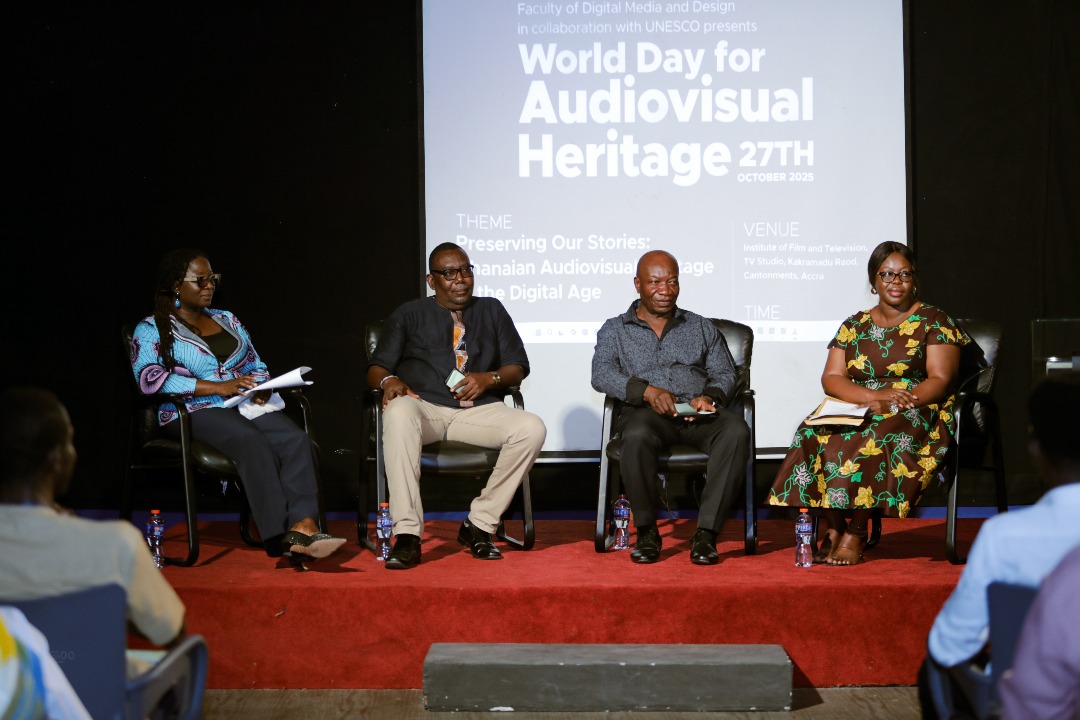
Panel Representatives from UniMAC-IFT, GAFTA, Prof. Gavua and Rep. UNESCO in a Discussion
A renewed call to protect Ghana’s cinematic and cultural legacy echoed through the University of Media, Arts and Communication-Institute of Film and Television (UniMAC-IFT) on October 27,2025. This call was made as the Faculty of Digital Media and Design (FDMD) at UniMAC-IFT, in collaboration with the United Nations Educational, Scientific and Cultural Organization (UNESCO) and the Ghana Academy of Film and Television Arts (GAFTA), hosted this year’s celebration of the World Day for Audio visual Heritage. The event, held at the Institute’s Television Studio, was themed “Preserving Our Stories: Ghanaian Audio-visual Heritage in the Digital Age.”
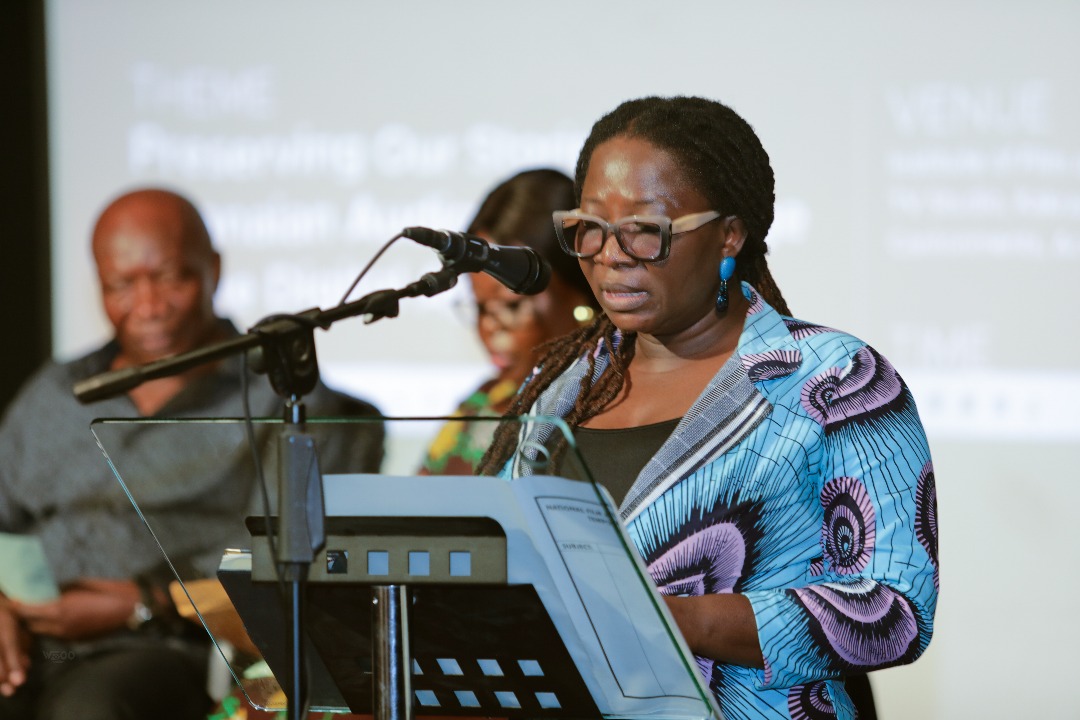
Dr. Rebecca Ohene-Asah, the Dean of the Faculty of Digital Media and Design Giving Opening Remarks
Opening the programme, Dr. Rebecca Ohene-Asah, the Dean of the Faculty of Digital Media and Design, emphasised that the commemoration was “not just a celebration but a call to action.” She reminded the audience that Ghana’s audio-visual archives represent, “a living reflection of where we were yesterday, where we are today, and where we aspire to be tomorrow.” Dr. Ohene-Asah also used the platform to announce a forthcoming Master’s programme at UniMAC in digital archiving and preservation, aimed at training professionals to protect Ghana’s creative heritage in the digital era.
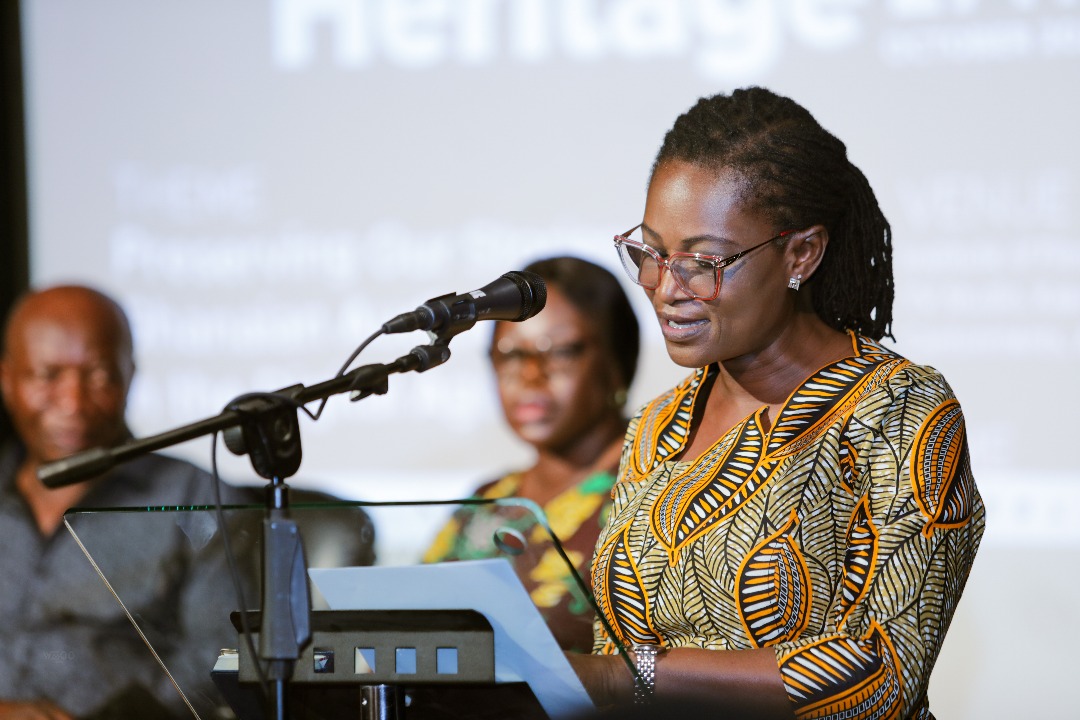
Ms. Jennifer Akude, Institute Registrar-UniMAC Speaks on Behalf of the Rector-IFT
Speaking on behalf of the Rector of UniMAC-IFT, Prof. Samuel Manasseh Yirenkyi, Ms. Jennifer Akude, the Institute Registrar underscored the importance of celebrating the day. She stated that, “audio-visual materials are far more than entertainment; they are “cultural artefacts that mirror our identity, history, and aspirations.” The statement called for stronger collaboration between institutions, creators, and policymakers to address the fragility of physical film and the urgency of digitisation.
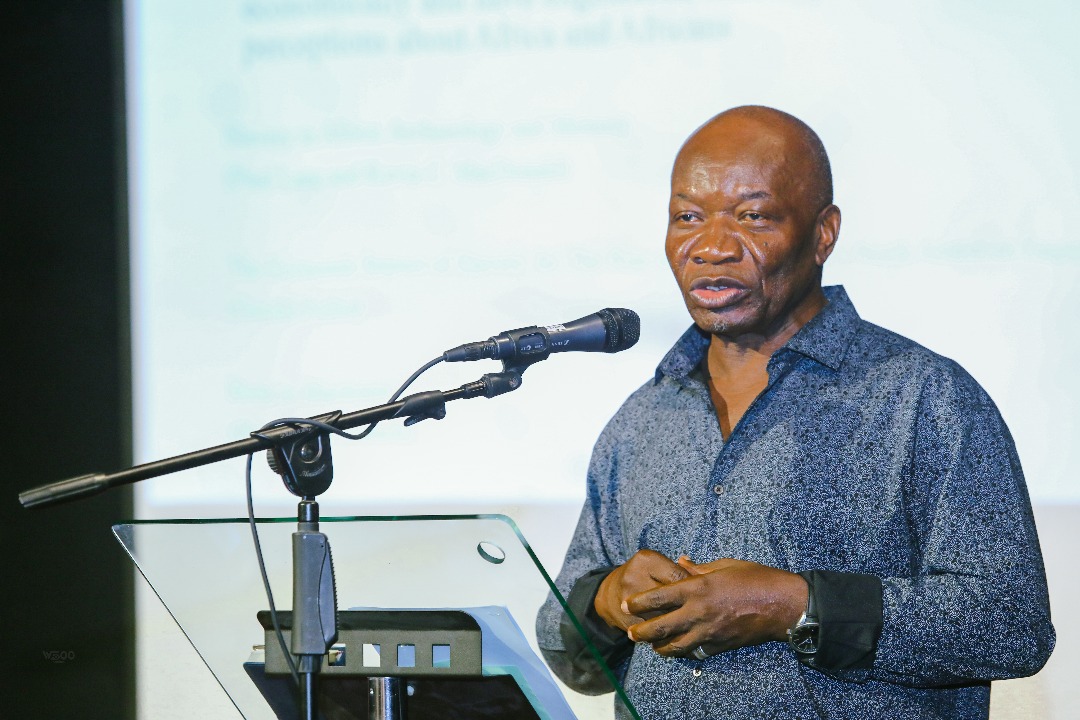
Professor Kodzo Gavua, Chair of the Ghana Heritage Committee and Council Chair at the University of Health and Allied Sciences (UHAS, Ho)
Delivering the keynote address, Professor Kodzo Gavua, Chair of the Ghana Heritage Committee and Council Chair at the University of Health and Allied Sciences (UHAS, Ho), offered a compelling historical reflection on memory, identity, and preservation. Calling himself a “licensed garbage collector” in the service of memory, Prof. Gavua traced Ghana’s audio-visual story from the colonial era to the modern digital landscape. “If we fail to preserve our stories,” he cautioned, “we lose the language of our identity.” He urged Ghanaian filmmakers and archivists to be deliberate about the stories they preserve and to see preservation not only as a technical exercise but as a political and cultural act.
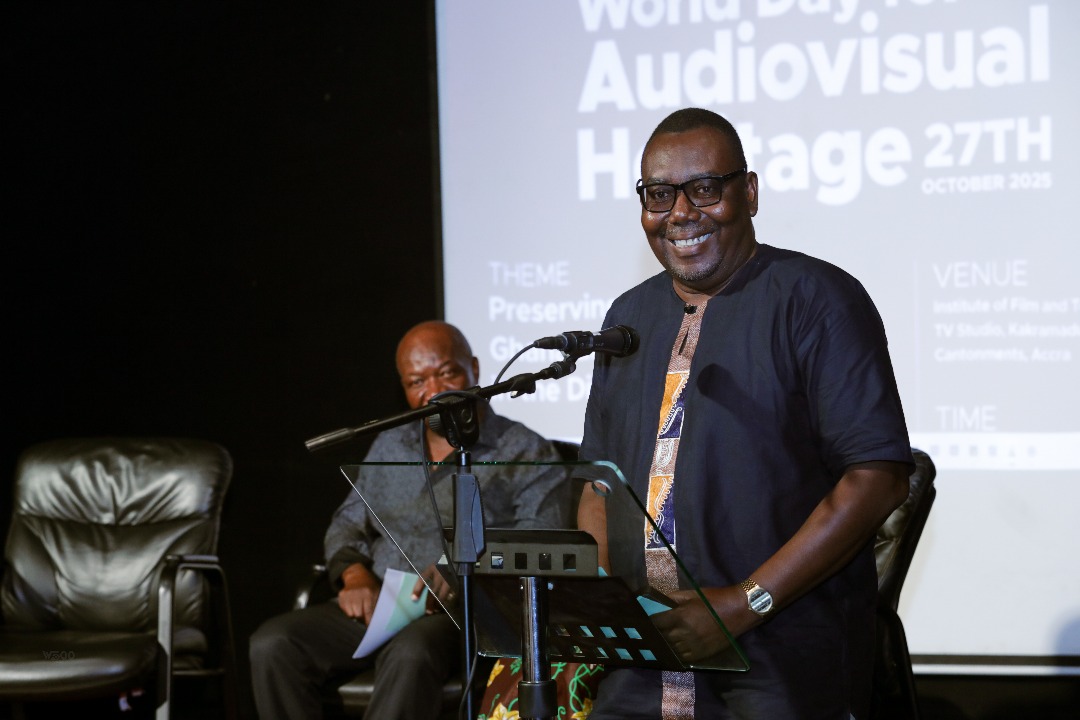
Dr. Fara Panbonor Awindor, the President of the Ghana Academy of Film and Television Arts (GAFTA) Delivering an Address
Dr. Fara Panbonor Awindor, the President of the Ghana Academy of Film and Television Arts (GAFTA), delivered a heartfelt address that resonated deeply with the day’s theme. He described audio-visual work as, “an intentional act of recording memory, culture, and humanity,” stressing that preservation must go beyond documentation to ensure accessibility. “We have a lot of visual material stored abroad, particularly in the United Kingdom, yet, we cannot easily access them because the equipment to view them no longer exists,” he explained. Dr. Awindor revealed that it would cost approximately five hundred thousand pounds (£ 500,000.00) to digitise these valuable materials, challenging both government and private institutions to commit to the cause. “Would we, as a nation, be willing to invest that amount to safeguard our heritage?” he asked rhetorically.
Dr. Awindor also highlighted GAFTA’s ongoing collaboration with UniMAC-IFT to digitise and preserve audio-visual materials currently stored on outdated tapes. “It is a cultural responsibility,” he affirmed, “that what we record today can be preserved for posterity.”
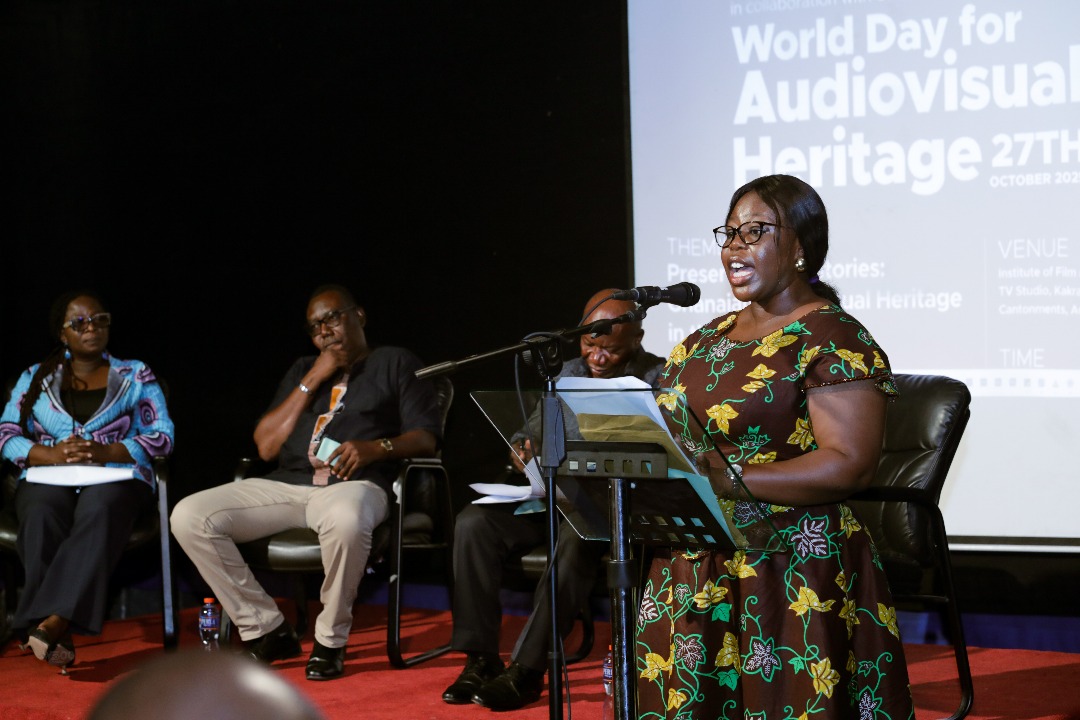
Speech from the Guest of Honour Dr. Naazia Ibrahim of the UNESCO Commission
Delivering the keynote address, Dr. Naazia Ibrahim, representing the Ghana National Commission for UNESCO, emphasised the urgent need for greater investment and coordination in safeguarding Ghana’s audio-visual heritage. She noted that while the country is rich in data and research, what remains lacking is the political will and financial commitment to preserve its cultural memory. Dr. Ibrahim reminded participants that films, music, and television are not merely entertainment, but powerful expressions of Ghana’s identity and history. She urged academia and industry players to work together, advocate stronger, and innovate with technology to preserve, not replace the nation’s cultural heritage. “Our audio-visual legacy,” she said, “is the living narrative of who we are as a people. Preserving it is not just a technical task; it is a shared responsibility to protect our stories, our pride, and our identity.”
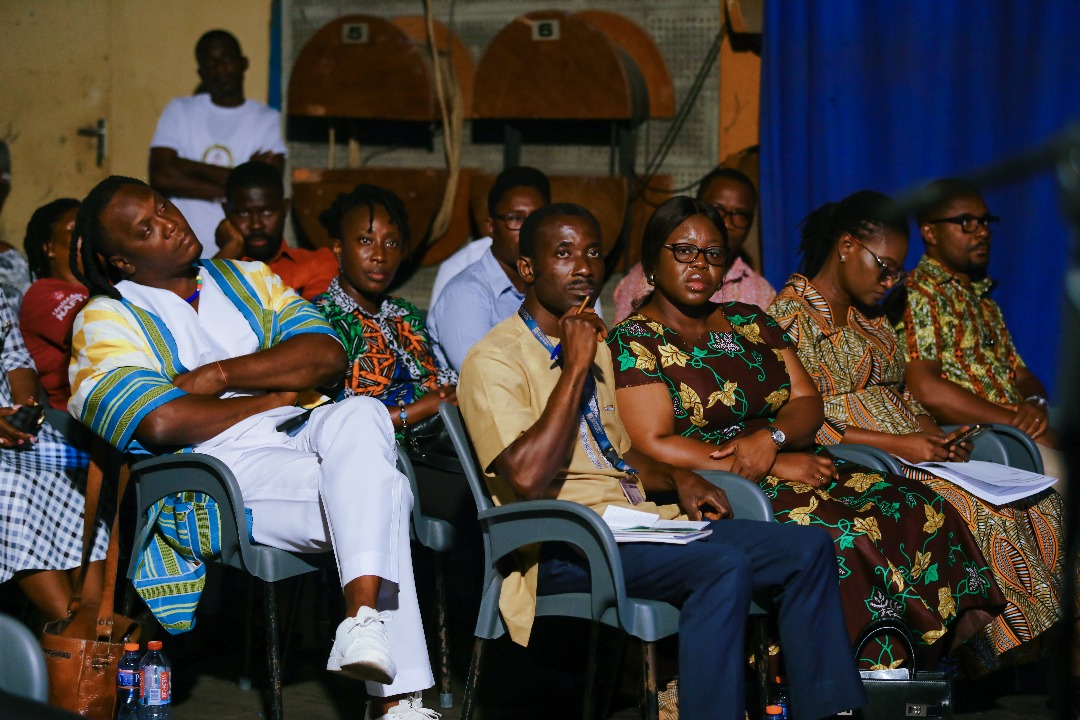
A Cross-section of Guests, Faculty and Students at the Event
The event brought together students, faculty, industry professionals, and cultural stakeholders for a film screening, keynote lectures, and an open dialogue on the future of Ghana’s audio-visual memory.
Panel discussions that followed the keynote address featured contributions from academics and filmmakers, who stressed the importance of preservation in national development. Dr. Philip Owusu Asaase, a Lecturer at the Institute of African Studies, urged that audio-visual archiving should be viewed as an economic and developmental asset. “Preservation is not just about keeping memories; it’s about creating a knowledge economy that fuels research, innovation, and cultural exports,” he remarked.
Dr. Joseph Aketema, the Acting Head of Production Techniques at UniMAC-IFT, emphasised the need to strengthen local capacity for film restoration and metadata cataloguing, noting that without such systems, “we risk losing not only data but also the creative DNA of a generation.”
During the open discussion session, a filmmaker in the person of Owusu Ansah Castro Sarpong highlighted the tension between commercial viability and cultural integrity in film production. He argued that while entertainment should attract markets, it must also reflect authentic Ghanaian narratives. He recommended that a film fund should be set up to support industry development.
In response to his recommendation for a sustainable film fund to support industry development, Mr. George Bossompim, a Lecturer at UniMAC-IFT and a member of the National Film Authority (NFA) Board, disclosed that GAFTA recently supported the National Film Authority with a one hundred thousand Ghana cedis (GHC 100,000) contribution under the national film fund initiative. He noted that this gesture reinforces the academy’s commitment to building a strong film economy. Mr. Bosompim, who is also part of the “Bring Back
Our Old Films” project working to repatriate and digitise Ghana’s early motion pictures from the United Kingdom, emphasised that such efforts must be collective if Ghana is to reclaim its creative heritage.
Mr. Joshua Otable, another Lecturer at UniMAC-IFT, added that archives should include not only films but also production tools and equipment that carry historical value. “When we store visuals, we must ensure they contribute to history rather than merely fill shelves,” he said.
Ms. Makida El Husseini, a student of UniMAC-IFT, called for accessible public screenings of restored Ghanaian films to reconnect young audiences with their creative past, while participants across the board stressed the need for national and private investment in audio-visual digitisation.
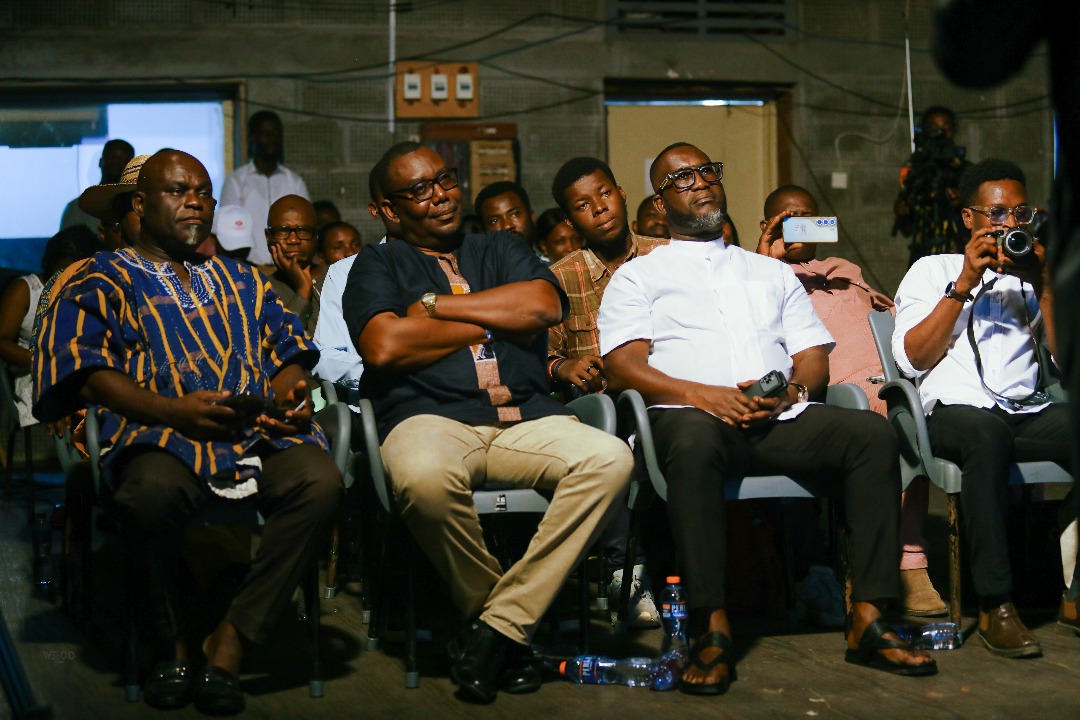
Guests, Faculty and Students at the Event Enjoying the Film, “Freedom”
The highlight of the day was the screening of the restored Ghanaian film Freedom, a part of the “Ghana Analogue Video Film Digitisation, Archiving and Repository Project.” The screening provided participants with a glimpse of how the nation’s cinematic history can be revived through technology and intentional preservation.
Giving Closing Remarks, Dr. Emmanuel Ayu Nyarko, the Acting Head of Animation and Game Development at UniMAC-IFT summarised the day’s reflections: “What we create and preserve today will tell the story of who we are tomorrow.” He thanked UNESCO, GAFTA, and all partners for their continued collaboration and urged participants to sustain the preservation agenda beyond the anniversary.
Instructively, as Ghana joined the world to celebrate the World Day for Audio-visual Heritage, one message rang clear: safeguarding the nation’s audio-visual archives is both a cultural duty and a strategic economic investment. Through restoration projects, academic partnerships, and international collaboration, the country’s creative memory is being given renewed urgency and purpose. The challenge now lies in ensuring that Ghana’s stories, its images, songs, and voices, remain alive for generations to come.
Drafted By Makida El Husseini
A Level 400 Broadcast Journalism Student, UniMAC-IFT
RECENT NEWS
-

Communique to All Alumni
-

UniMAC Men Stepped into the Kitchen and Stirred a Rare Sense of Community for Mother’s Day for all Women at UniMAC
-
‘THE EYES OF GHANA’: How A Film Screening at UniMAC-IFT is Reigniting a National Conversation on History, Memory, and Cinema
-

UniMAC-IFT Holds a Workshop on ‘The Vertical Revolution: Mastering Micro-Dramas for African Digital Economy
-
UniMAC Matriculates Fresh Students for the 2025/2026 Academic Year
-

UniMAC Holds 1st Unified SRC Elections and Swears-in New Executives; Moses Desire Kouyo Takes Office as President
-

UniMAC Mourns with Family as the Late Nelson Blay Narkotey is Laid to Rest
-

UniMAC and AKUNA Signs MOU to Provide Hands-On Training to Students
-
UniMAC Celebrates Academic Brilliance as Ms. Joanna Nhyira Adu-Amoani Emerges Valedictorian with a Remarkable 3.99 CGPA
-
UniMAC Holds 1st Session of the 4th Congregation; Graduates 897 as Leaders and Call for Renewed National Support